Foundational Flakiness: Mastering Basic Pastry Doughs | Sweety's Bakery
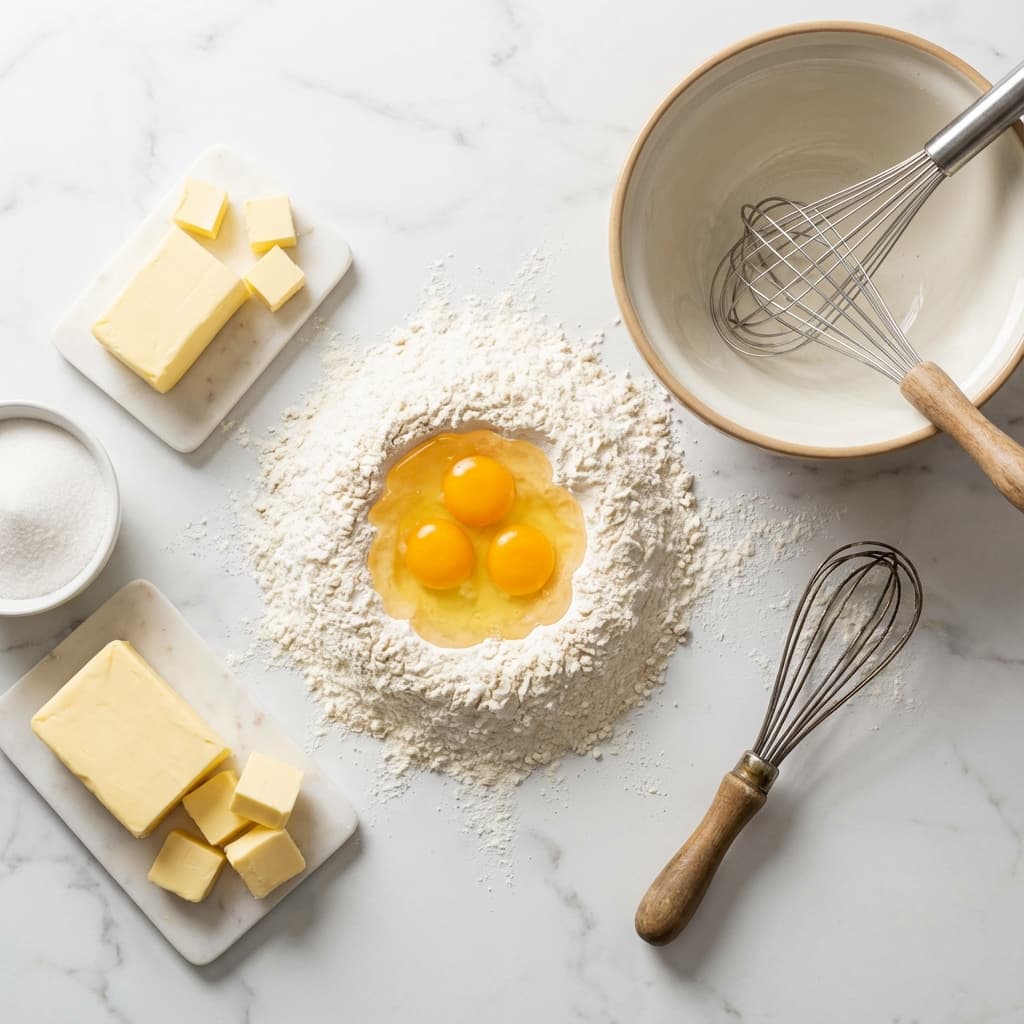
Welcome to Sweety's Bakery guide to mastering basic pastry doughs! From tender shortcrusts to airy puff pastry, these foundational doughs are the b...
📑 Table of Contents
Foundational Flakiness: Mastering Basic Pastry Doughs
Welcome to Sweety's Bakery guide to mastering basic pastry doughs! From tender shortcrusts to airy puff pastry, these foundational doughs are the building blocks of countless sweet and savory delights. Understanding the science behind each type of pastry will empower you to create everything from elegant tarts and savory pies to delicate croissants and choux creations.
The Science of Fat-to-Flour Ratios & Gluten Control
Pastry doughs are a fascinating study in the precise control of gluten development and the strategic use of fat. Gluten, formed when flour proteins interact with water, provides elasticity. For flaky pastries, we want minimal gluten development to maintain tenderness. This is achieved by using cold ingredients, minimal handling, and a high fat-to-flour ratio. Fat shortens gluten strands, contributing to tenderness and creating layers (in laminated doughs like puff pastry) that expand with steam during baking. The scientific key is to prevent extensive gluten formation, ensuring a delicate, melt-in-your-mouth texture rather than a tough, chewy one.
Tips & Variations for Basic Pastry Doughs
Tips for Perfect Pastry Doughs:
- Cold is Key: Always use very cold butter, water, and even chill your flour. This prevents fat from melting too soon and controls gluten development.
- Don't Overwork: Handle dough as little as possible. Overworking develops gluten, resulting in tough pastry.
- Rest & Chill: Allow dough to rest and chill in the refrigerator before rolling and baking. This relaxes the gluten and firms up the fat, improving flakiness and preventing shrinkage.
- Measure by Weight: Precision is paramount. Measure all ingredients by weight for consistent results.
- Proper Rolling: Roll dough evenly and consistently, turning it frequently to prevent sticking and ensure uniform thickness.
Variations & Considerations:
- Shortcrust Pastry (Pâte Brisée): A simple, versatile dough used for pies, quiches, and tarts. Contains flour, fat (butter/shortening), water, and sometimes egg.
- Sweet Shortcrust Pastry (Pâte Sucrée): A richer, sweeter, and more delicate dough, often made with powdered sugar and egg yolks. Ideal for dessert tarts.
- Puff Pastry (Pâte Feuilletée): A laminated dough with hundreds of alternating layers of butter and dough, creating an incredibly light and flaky result. Used for croissants, Napoleons, and vol-au-vents.
- Choux Pastry (Pâte à Choux): A cooked dough that puffs dramatically in the oven to create a hollow center. Used for éclairs, cream puffs, and profiteroles.
- Phyllo Dough: Extremely thin, unleavened sheets of dough. Used for baklava, spanakopita, and savory pastries. Often bought pre-made.
- Rough Puff Pastry: A quicker version of traditional puff pastry, yielding similar flakiness with less effort.
- Gluten-Free Pastry: Can be made with gluten-free flour blends, often requiring binders and adjustments to hydration.
Save Your Calculations?
Get the Bakery Business OS to save recipes, track inventory, and manage orders in one place.
Reclaim Your Time →
Sarah Aitdahan
Sarah Aitdahan is the founder of Sweety's Bakery and the creator of this website. A lifelong baker with a passion for perfecting the classics, she believes that baking should be accessible and joyful for everyone. This website is her way of giving back to the incredible baking community by providing free tools, resources, and recipes.
.JPG&w=400&q=75&output=webp)
.JPG&w=400&q=75&output=webp)
.JPG&w=400&q=75&output=webp)
.JPG&w=400&q=75&output=webp)
.JPG&w=400&q=75&output=webp)
.JPG&w=400&q=75&output=webp)
.JPG&w=400&q=75&output=webp)
.JPG&w=400&q=75&output=webp)
.JPG&w=400&q=75&output=webp)
.JPG&w=400&q=75&output=webp)