Baking Soda vs. Baking Powder: The Ultimate Guide
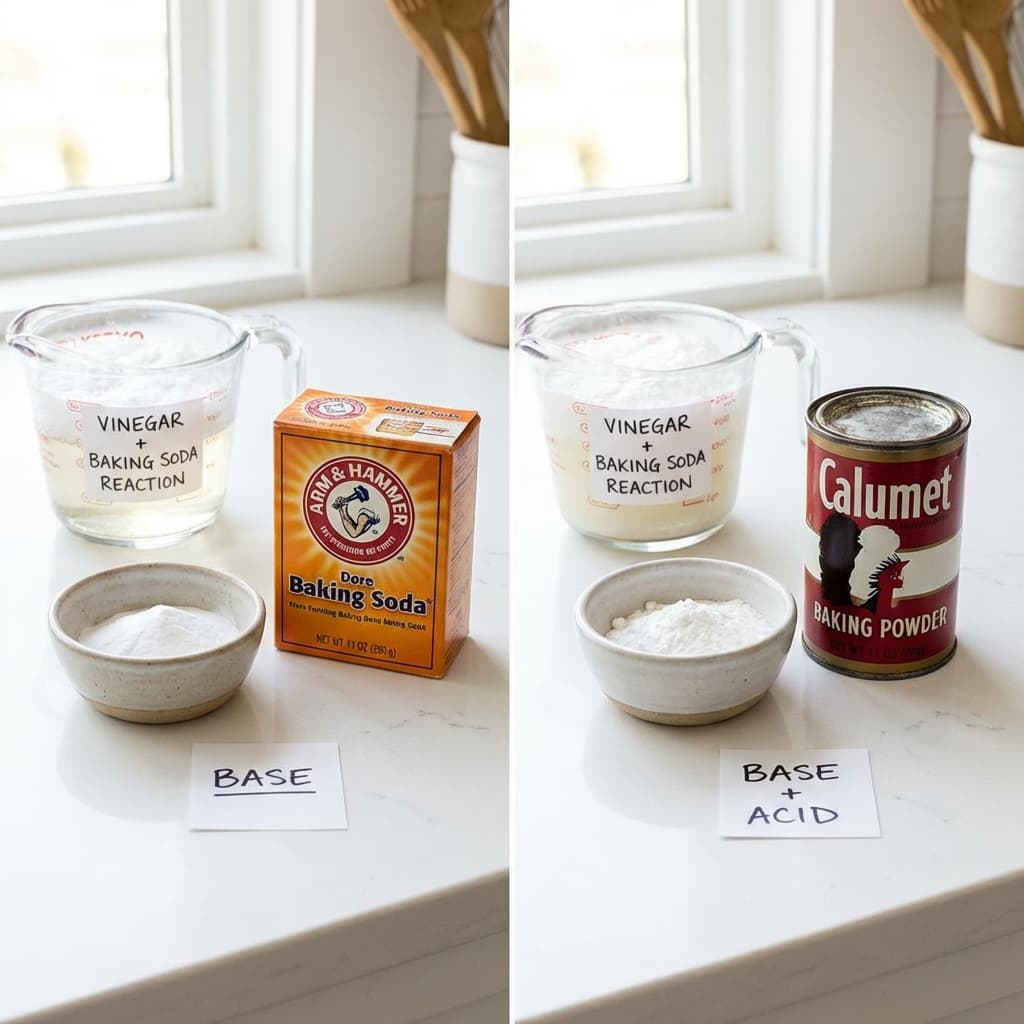
Is baking soda the same as baking powder? Can you substitute one for the other? We answer all your leavening questions in this deep dive.
📑 Table of Contents
Baking Soda vs. Baking Powder: The Ultimate Guide
If you've ever stood in your kitchen holding a teaspoon, staring at two similar-looking white powders and wondering "is baking soda the same as baking powder?", you are not alone. This is one of the most common confusion points for home bakers.
While both are chemical leavening agents used to help baked goods rise, they are chemically different and function in unique ways. Mixing them up can lead to metallic-tasting cakes, flat muffins, or cookies that spread into a giant puddle.
What is Baking Soda?
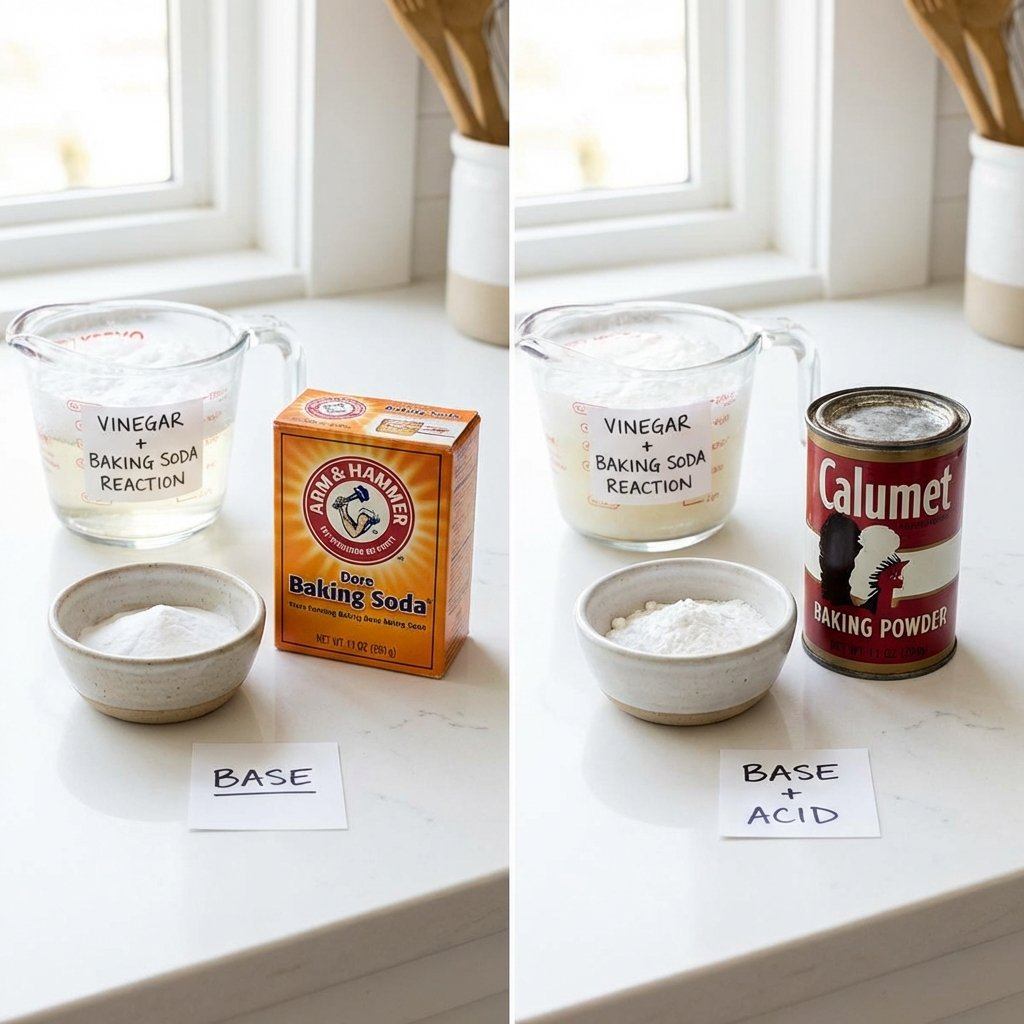
What is baking soda? Scientifically known as sodium bicarbonate, baking soda is a base in the world of chemistry (alkaline). It's a powerful leavener that reacts immediately when it comes into contact with an acid and a liquid.
This reaction produces carbon dioxide bubbles, which expand in the oven heat to lift your cake or bread. Because it needs an acid to activate, you'll almost always see baking soda in recipes that include ingredients like buttermilk, yogurt, lemon juice, cocoa powder (natural), or brown sugar (molasses is acidic).
Key characteristic: Baking soda is 4x stronger than baking powder.
Is Baking Powder the Same as Baking Soda?
The short answer is no, baking powder is not the same as baking soda. However, they are related.
Baking powder is actually a mixture of baking soda, a powdered acid (usually cream of tartar), and a cornstarch buffer to prevent them from reacting in the jar.
Because it contains its own acid, baking powder only needs moisture and heat to work. This makes it "double-acting"—it reacts once when mixed with wet ingredients, and again when hit with the heat of the oven. This provides a more reliable, sustained rise for recipes that don't have natural acids.
Can I Use Baking Soda Instead of Baking Powder?
This is the million-dollar question: can I use baking soda instead of baking powder?
If you have Baking Soda but need Baking Powder:
Yes, but you need to add an acid. The rule of thumb is mixing 1/4 teaspoon baking soda + 1/2 teaspoon cream of tartar to equal 1 teaspoon of baking powder.
If you have Baking Powder but need Baking Soda:
This is harder. You need to use 3-4 times as much baking powder to get the same lifting power, but this often adds too much extra acid and liquid to the recipe, potentially ruining the taste and texture. In a pinch, it's safer to run to the store.
Save Your Calculations?
Get the Bakery Business OS to save recipes, track inventory, and manage orders in one place.
Reclaim Your Time →How Much Baking Soda is Safe to Drink Daily?
Beyond baking, people often use baking soda for health reasons, like settling an upset stomach. But how much baking soda is safe to drink daily?
According to health experts, adults should not exceed ½ teaspoon dissolved in a glass of water every 2 hours, and no more than 3 ½ teaspoons total in a 24-hour period. For those over 60, the limit is 1 ½ teaspoons per day. Excessive consumption can disrupt your body's electrolyte balance and acid-base levels, leading to serious health issues.
Always consult your doctor before using baking soda as a regular supplement.
Summary Table
| Feature | Baking Soda | Baking Powder |
|---|---|---|
| Main Ingredient | Sodium Bicarbonate | Sodium Bicarbonate + Acid |
| Activation | Needs Acid + Liquid | Needs Liquid + Heat |
| Strength | Strong (4x) | Moderate (1x) |
Hopefully, this guide clears up the confusion! Happy baking!

Sarah Aitdahan
Sarah Aitdahan is the founder of Sweety's Bakery and the creator of this website. A lifelong baker with a passion for perfecting the classics, she believes that baking should be accessible and joyful for everyone. This website is her way of giving back to the incredible baking community by providing free tools, resources, and recipes.
.JPG&w=400&q=75&output=webp)
.JPG&w=400&q=75&output=webp)
.JPG&w=400&q=75&output=webp)
.JPG&w=400&q=75&output=webp)
.JPG&w=400&q=75&output=webp)
.JPG&w=400&q=75&output=webp)
.JPG&w=400&q=75&output=webp)
.JPG&w=400&q=75&output=webp)
.JPG&w=400&q=75&output=webp)
.JPG&w=400&q=75&output=webp)